How to Start a Laundromat in 2026: Complete Step-by-Step Guide
Intro
To start a laundromat in 2026, you need roughly $200K to $500K in startup capital, a location with strong renter density, and a written plan that turns location, equipment, and pricing into one Go or No-Go decision. Most first-time owners burn $30K to $50K on avoidable mistakes before they ever open the door. This guide walks through the exact 5 steps a new owner should follow before signing a lease.
What Is a Laundromat Business
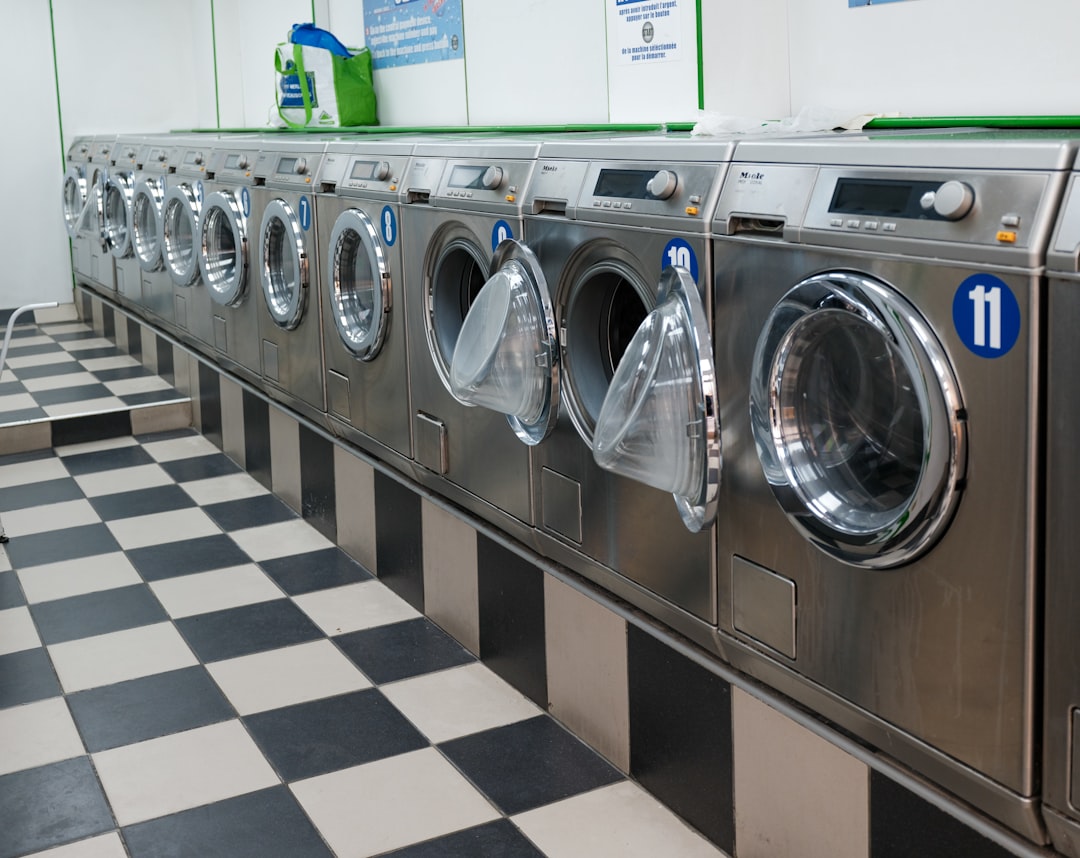
A laundromat (also called a coin laundry or self-service laundry) is a retail location where renters and travelers pay to use commercial washers and dryers. The business runs on three revenue streams: self-service wash and dry, wash-dry-fold (WDF) service, and ancillary income from vending, change machines, and sometimes pickup-delivery routes. Modern stores skip coins entirely and use card or app-based pay systems like DexterPay or LaundryCard.
A laundromat is not a dry cleaner and is not a franchise by default. Real laundromat franchises in 2026 include WaveMAX Laundry, SpinXpress, and Cyclone Laundry. Speed Queen and Tide Cleaners are equipment or dry-cleaning brands and should not be confused with laundromat franchises.
Laundromat Quick Facts
- Typical startup cost: $200,000 to $500,000 for a 2,000 to 3,000 sq ft store
- Build-new pathway runs higher; buying an existing store can run lower with seller financing
- Year 1 revenue range: roughly $120,000 to $200,000 for a single store
- Healthy stabilized net margin: around 20% to 25% before owner draw
- Break-even point: typically Month 12 to Month 14 for a new build
- Equipment lifespan: 12 to 15 years for commercial washers if maintained
- Industry source: Coin Laundry Association (laundryassociation.org)
Step 1: Pick the Right Business Model
Three laundromat models dominate in 2026: build-new on raw retail space, buy an existing store, and acquire a distressed store and reposition it. Each has a different cash and risk profile.
Build-new gives you full control over equipment mix and store layout, but cash needs are the highest. Buying an existing store gets you immediate cash flow but you inherit the seller’s problems — outdated machines, deferred maintenance, lease terms you cannot change. Distressed acquisition is the lowest entry price but requires hands-on operations experience to fix what the prior owner broke.
A fourth path some operators use is multi-store from the start. Skip it in Year 1. Multi-store works after you have one store running cleanly for 12+ months and a manager you trust.
Score each model against your cash, your timeline, and your tolerance for renovation work. Pick one and stop comparing. Indecision between models eats more time than any actual decision.
Step 2: Score Your Location with Hard Numbers
Location is the single biggest predictor of whether your store hits Year 1 revenue targets. The locations that work share four traits: 1+ mile radius with 60%+ renters, 5,000+ households within 1 mile, parking that holds 8+ cars, and visibility from a road with 15,000+ daily traffic count.
Use the U.S. Census Bureau ACS data (census.gov) to pull renter share and household counts by tract. Drive every candidate site at 6 PM and Saturday at 11 AM. Count cars in competitor lots. Skip any site where you cannot answer “how many washers does the closest competitor run?” in 15 minutes.
A site that scores below your minimum on any one factor is a No-Go, even if every other number looks great. Renter density is the most-skipped check — owners fall in love with the building and ignore the demographics within walking distance.
Plan to visit your top 3 sites at least three times each: weekday rush hour, Saturday late morning, and a weeknight after 8 PM. The traffic profile shifts more than most operators expect.
Step 3: Build the Equipment Mix
A typical 2,000 sq ft store runs roughly 24 washers and 20 dryers across three sizes: 20 lb, 40 lb, and 60 lb. The split matters more than the total count. Stores that overweight 20 lb machines underperform because families with comforters drive to a competitor. Stores that overweight 60 lb machines waste capital on idle drums.
Buy commercial-grade only. Continental Girbau, Dexter, Speed Queen Commercial, and Maytag Commercial are the main vendors in 2026. Plan a 15% safety buffer on top of every quoted equipment price for delivery, install, plumbing, and electrical. Skip used equipment unless the seller is the original buyer and has full service records.
Step 4: Lock the Numbers Before You Sign Anything
Build a 12-month profit and loss projection before you commit to a lease. The line items that matter: rent (target under 18% of revenue), utilities (water plus gas plus electric, typically 22% to 28% of revenue), labor if attended, insurance, card processing fees, and equipment financing payments.
Calculate your break-even cycle count: fixed costs divided by gross profit per cycle. A typical store needs 600 to 900 cycles per day to clear break-even at Month 14. If your model needs 1,200+ cycles per day to break even, the numbers are wrong somewhere.
Build a Go or No-Go scorecard from these numbers. Green means launch. Yellow means rework one input. Red means walk away.
Stress-test the model at 80% of your projected revenue. If the store still services its debt at 80%, you have a real margin of safety. If it does not, you are one slow quarter from cash trouble.
Step 5: File, Insure, and Open
Form an LLC in your state, get an EIN from the IRS (irs.gov), and apply for a sales tax permit if your state taxes laundry services. Get a commercial general liability policy with at least $1M per occurrence and inland marine coverage on your equipment.
The 30 days before opening are about systems, not marketing. Test every machine through a 7-day soak test. Set up your card system, your security camera DVR, and your automated email alerts on water leaks. Train any attendant staff on a written closing checklist. Walk the store the night before open and fix every small thing.
Open quietly the first week. Loud grand openings draw crowds your machines cannot absorb yet.
Common Mistakes That Kill New Stores
- Signing a lease longer than 5 years before proving the location works
- Buying 30+ machines because the salesperson said you need them
- Skipping water heater capacity math (most underbuilds run out of hot water at peak hours)
- Promising 24-hour operation before you have remote monitoring in place
- Setting wash prices at competitor parity without checking your own cost per cycle
Cost Breakdown (Single-Store Build-New, 2026)
| Line Item | Low | Mid | High |
|---|---|---|---|
| Equipment (washers + dryers) | $90,000 | $140,000 | $200,000 |
| Build-out and plumbing | $50,000 | $80,000 | $120,000 |
| Lease deposit + first 3 months rent | $15,000 | $25,000 | $40,000 |
| Card system and surveillance | $8,000 | $12,000 | $18,000 |
| Permits, licenses, legal | $3,000 | $5,000 | $8,000 |
| Working capital reserve | $25,000 | $40,000 | $60,000 |
| Marketing launch | $3,000 | $5,000 | $8,000 |
| Total | $194,000 | $307,000 | $454,000 |
Numbers above reflect single-store build-new modeling from the bizOpsPlaybook financial template. NerdWallet’s 2024 startup cost analysis (nerdwallet.com) cites a similar $200K to $500K range.
FAQ
How much does it cost to start a laundromat in 2026? Plan for $200,000 to $500,000 for a single-store build-new. Buying an existing store can run lower if the seller offers financing, but you inherit any deferred maintenance.
How long until a new laundromat breaks even? A typical new build hits monthly break-even around Month 12 to Month 14. Anything faster usually means the operator bought into an existing customer base.
Do I need experience to open a laundromat? No, but you need a written plan with hard numbers. First-time owners who follow a structured location and equipment scoring system avoid the most common cash-burning mistakes.
Is a laundromat a passive business? Not in Year 1. Plan to be on-site 30 to 50 hours per week through Month 6. After systems are stable and an attendant is trained, the time commitment drops to 10 to 15 hours per week.
Should I buy a franchise or start independent? Independent stores keep more margin but require more decisions. A franchise like WaveMAX gives you systems but takes 5% to 7% of revenue. Run the numbers both ways before deciding.
Can I run a laundromat with a full-time job? Only after Month 6, and only if you have a trained attendant or remote-monitoring tools in place. The first 6 months are full-time work even if the store is technically self-service.
Conclusion + Next Step
Starting a laundromat in 2026 comes down to disciplined math: pick a model, score the location, size the equipment, model the P&L, and only then sign anything. If you want every worksheet, scorecard, and Excel model used above ready to fill in, the Laundromat Business Plan Blueprint on Etsy gives you 130+ pages, 184 action items, and 8 decision tools in one download.
Image Alt Text Suggestions
- “How to start a laundromat — 5-step guide cover image”
- “Laundromat startup cost breakdown table 2026”
- “Commercial washer and dryer mix for a 2,000 square foot store”
- “Laundromat break-even chart showing Month 14 cross-over”
- “Location scoring worksheet for new laundromat owners”
- “Sample 12-month profit and loss for a single-store laundromat”
JSON-LD Schema
{
  "@context": "https://schema.org",
  "@graph": [
    {
      "@type": "HowTo",
      "name": "How to Start a Laundromat in 2026",
      "description": "5-step guide to starting a laundromat: model selection, location scoring, equipment mix, financial modeling, and launch.",
      "totalTime": "P180D",
      "estimatedCost": {
        "@type": "MonetaryAmount",
        "currency": "USD",
        "value": "300000"
      },
      "step": [
        {"@type": "HowToStep", "name": "Pick the Right Business Model", "text": "Choose between build-new, buy existing, or distressed acquisition based on your cash, timeline, and renovation tolerance."},
        {"@type": "HowToStep", "name": "Score Your Location with Hard Numbers", "text": "Validate renter share, household count within 1 mile, parking capacity, and traffic count before any lease signing."},
        {"@type": "HowToStep", "name": "Build the Equipment Mix", "text": "Plan a 24 washer / 20 dryer mix across 20 lb, 40 lb, and 60 lb sizes from commercial-grade vendors."},
        {"@type": "HowToStep", "name": "Lock the Numbers Before You Sign Anything", "text": "Build a 12-month P&L, calculate break-even cycles per day, and use a Go/No-Go scorecard."},
        {"@type": "HowToStep", "name": "File, Insure, and Open", "text": "Form an LLC, get insurance, run 7-day equipment tests, and open quietly the first week."}
      ]
    },
    {
      "@type": "FAQPage",
      "mainEntity": [
        {"@type": "Question", "name": "How much does it cost to start a laundromat in 2026?", "acceptedAnswer": {"@type": "Answer", "text": "Plan for $200,000 to $500,000 for a single-store build-new."}},
        {"@type": "Question", "name": "How long until a new laundromat breaks even?", "acceptedAnswer": {"@type": "Answer", "text": "A typical new build hits monthly break-even around Month 12 to Month 14."}},
        {"@type": "Question", "name": "Do I need experience to open a laundromat?", "acceptedAnswer": {"@type": "Answer", "text": "No, but you need a written plan with hard numbers and structured scoring on location and equipment."}},
        {"@type": "Question", "name": "Is a laundromat a passive business?", "acceptedAnswer": {"@type": "Answer", "text": "Not in Year 1. Plan 30 to 50 hours per week through Month 6, then 10 to 15 after systems are stable."}}
      ]
    },
    {
      "@type": "Article",
      "headline": "How to Start a Laundromat in 2026: Complete Step-by-Step Guide",
      "author": {"@type": "Organization", "name": "bizOpsPlaybook"},
      "datePublished": "2026-04-27"
    }
  ]
}
#Laundromat #Small Business #Startup #Business Plan #Self-Service Laundry