Laundromat Site Selection 2026: The 12-Factor Scoring Method
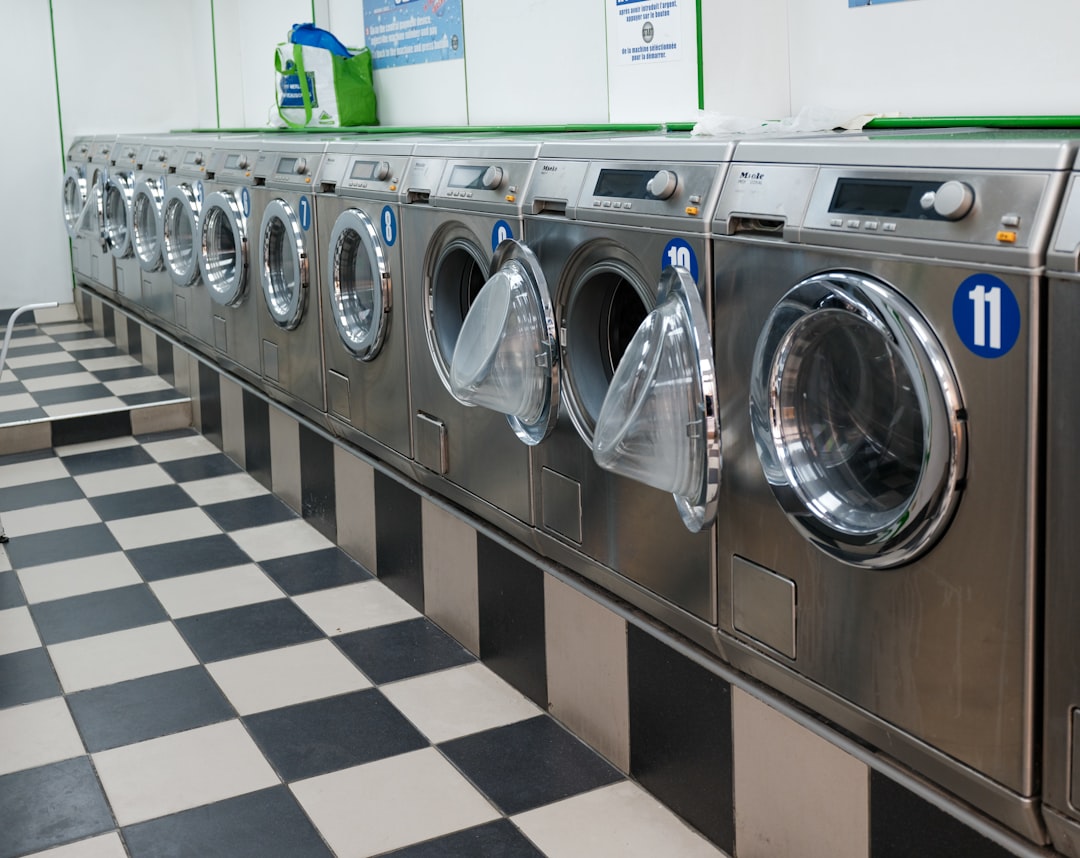
Veteran laundromat owners and Coin Laundry Association industry guides repeat one rule above every other: the site decides 80% of the outcome. Everything else — equipment, signage, hours, attendant or unattended — gets calibrated around what the site itself can support. Most first-time owners get this exactly backwards: they fall in love with a store, they obsess over washer brands and capacity mix, and they backfill assumptions about “the area” with optimism. Year 2 reveals which assumptions were wrong.
This guide is the 12-factor scoring rubric that turns site selection from gut into math. Score every candidate zip code on these twelve, weight them by importance, and the spread between a 78-point site and a 51-point site tells you which one will actually pay you back.
Note: Demographic thresholds and weighting values below are 2026 industry benchmarks drawn from Coin Laundry Association and major industry consultants. Local market conditions vary significantly — calibrate the rubric against successful comparable stores in your region before committing.
Why Site Selection Outweighs Everything Else
A great operator can rescue a mediocre store. No operator can rescue a bad site. The reason is simple: the customers a laundromat serves are captive to the catchment area. If the trade area within a 1–2 mile radius doesn’t have enough renters, low-income households, or apartment complexes without in-unit laundry, no amount of marketing or equipment upgrades will create demand that isn’t physically there.
This is what differentiates laundromats from most other retail. A clothing boutique can build a regional following with social media. A bakery can run wholesale. A laundromat does roughly what the catchment area allows it to do, plus or minus 15% based on operator skill. So pick the catchment area carefully.
The 12-Factor Scoring Rubric
Each factor is scored 1–10, weighted by importance, and summed to a total. The maximum possible score is 100. Here’s the breakdown.
Factor 1: Renter Density (Weight: 12%)
The single most important demographic. Renters use laundromats; homeowners don’t.
- 8–10 points: 60%+ renter-occupied housing within 1.5 miles
- 5–7 points: 40–59% renter-occupied
- 1–4 points: Below 40% renter-occupied
Pull the data from the U.S. Census Bureau ACS 5-year estimates by census tract.
Factor 2: Median Household Income (Weight: 10%)
Counterintuitively, laundromats over-index toward lower-middle income zip codes — $35K–$65K median. Above $80K, residents tend to have in-unit washers; below $25K, they may skip drying or use cheaper alternatives.
- 8–10 points: $35K–$65K median household income
- 5–7 points: $25K–$35K or $65K–$85K
- 1–4 points: Above $85K or below $25K
Factor 3: Apartment Density Within 1 Mile (Weight: 10%)
Apartment buildings without in-unit laundry are the highest-value catchment population. Count them on Google Maps within a one-mile radius.
- 8–10 points: 15+ apartment complexes / multifamily buildings
- 5–7 points: 8–14
- 1–4 points: Fewer than 8
Factor 4: Existing Competition (Weight: 10%)
Some competition is healthy (validates demand). Too much is fatal.
- 8–10 points: 1–2 competitors within 2 miles, both 10+ years old (stable demand, slow operators)
- 5–7 points: 3 competitors, mixed ages
- 1–4 points: 4+ competitors OR a competitor opened in the last 18 months (fresh equipment, aggressive operator)
Factor 5: Visibility + Drive-By Traffic (Weight: 8%)
The store needs to be seen from the road. A laundromat tucked behind another business loses 30%+ of the natural customer flow.
- 8–10 points: Primary frontage on a road with 15K+ vehicles/day
- 5–7 points: Visible frontage on a road with 5K–15K vehicles/day
- 1–4 points: Side road, behind another business, or low traffic count
Factor 6: Parking (Weight: 7%)
Laundromat customers carry heavy loads. They will not park 200 feet away and walk.
- 8–10 points: Dedicated parking lot with 15+ spaces, drive-up adjacent to entrance
- 5–7 points: Shared lot with 8–14 spaces nearby
- 1–4 points: Street parking only or shared lot with fewer than 8 spaces
Factor 7: Lease Term Available (Weight: 8%)
You need a lease long enough to recoup equipment investment, with renewal options that protect against landlord squeeze.
- 8–10 points: 10+ years remaining (with options), 3% annual escalation cap or CPI floor
- 5–7 points: 7–10 years, 3–5% annual escalation
- 1–4 points: Less than 7 years remaining or uncapped escalation
Factor 8: Utility Infrastructure (Weight: 9%)
Water + gas + electric capacity. A laundromat needs serious infrastructure — many spaces can’t support the load without expensive upgrades.
- 8–10 points: Existing laundromat or industrial space with 3-phase electric, dedicated water main, and high-capacity gas line
- 5–7 points: Convertible space with documented utility upgrade quote under $25K
- 1–4 points: Major utility infrastructure upgrades needed ($25K+)
Factor 9: CAM + NNN Charges (Weight: 6%)
Triple-net lease charges (CAM, taxes, insurance pass-through) can add 25–40% to the base rent. Predictable CAM is critical.
- 8–10 points: Base rent + CAM under $1.75/sqft/month combined; CAM capped at fixed annual amount
- 5–7 points: Combined $1.75–$2.50/sqft, partially capped CAM
- 1–4 points: Above $2.50/sqft combined, uncapped CAM
Factor 10: Neighborhood Safety + Foot Traffic Quality (Weight: 6%)
A laundromat depends on customers spending 60–90 minutes inside. Safety perception drives evening + weekend traffic.
- 8–10 points: Mixed retail corridor with frequent foot traffic, low crime index, well-lit at night
- 5–7 points: Moderate corridor, mixed safety perception
- 1–4 points: Isolated location, poor lighting, or area with elevated crime stats
Factor 11: Anchor Tenants + Co-Tenancy (Weight: 7%)
What else is in or near the strip mall changes foot traffic dramatically.
- 8–10 points: Co-tenants include grocery, dollar store, fast food, convenience store — high-frequency destinations
- 5–7 points: Mixed co-tenancy with some traffic drivers
- 1–4 points: Strip with no anchors, professional services only, or empty units
Factor 12: Demographic Trajectory (Weight: 7%)
Is the area growing, stable, or declining? Compare ACS 5-year estimates from the most recent dataset versus 5 years prior.
- 8–10 points: Renter population growing 2%+/year, household formation positive
- 5–7 points: Stable population, flat household formation
- 1–4 points: Declining renter population or net household loss
Scoring Worked Example
Three candidate sites — each in the same metro, different submarkets:
| Factor | Weight | Site A | Site B | Site C |
|---|---|---|---|---|
| 1. Renter density | 12 | 9 | 6 | 4 |
| 2. Median income | 10 | 8 | 9 | 5 |
| 3. Apartment density | 10 | 8 | 5 | 3 |
| 4. Competition | 10 | 6 | 8 | 9 |
| 5. Visibility | 8 | 9 | 6 | 7 |
| 6. Parking | 7 | 7 | 8 | 4 |
| 7. Lease term | 8 | 9 | 5 | 6 |
| 8. Utilities | 9 | 10 | 4 | 7 |
| 9. CAM + NNN | 6 | 6 | 8 | 5 |
| 10. Safety | 6 | 7 | 8 | 5 |
| 11. Co-tenancy | 7 | 8 | 7 | 4 |
| 12. Demographic trajectory | 7 | 9 | 5 | 4 |
| Weighted total | 80.4 | 64.5 | 52.4 |
Site A scores 80 — strong site. Site B scores 65 — viable but needs operator discipline to offset weak fundamentals. Site C scores 52 — pass, even if the rent looks cheap.
A working threshold: 75+ is a strong site, 60–74 is operator-dependent, below 60 is a pass.
What Most First-Time Owners Get Wrong
Three mistakes that show up over and over in failed first stores:
- Falling in love with cheap rent. Cheap rent often correlates with bad fundamentals — low visibility, weak co-tenants, declining demographics. The rent savings get eaten by lost revenue 20× over.
- Underweighting utility infrastructure. Converting a space without existing laundromat-grade utilities can add $40K–$120K to build-out. First-time buyers consistently underestimate this.
- Ignoring competition’s equipment age. A competitor with 20-year-old machines is much less threatening than one with new equipment. Walk every competitor before signing a lease.
The Walk-Through Checklist
Before signing a Letter of Intent on any site:
- Walk every competitor within 2 miles. Note machine count, equipment age, hours, cleanliness, attendant or unattended.
- Drive the site at three different times: weekday morning, Friday evening, Saturday afternoon. Watch the parking lot traffic.
- Pull ACS demographic data for census tracts within 1.5 miles.
- Get utility capacity documentation from the landlord — confirm the space can support 20+ commercial washers without upgrades.
- Request 24 months of utility bills from the existing tenant if the space was previously occupied — gives a real read on what the building consumes.
- Have a commercial real-estate attorney review the lease before LOI signing. $400–$800 fee saves vastly more in lease term mistakes.
When to Walk
Three patterns that should kill a deal regardless of how nice the space feels:
- Lease term under 7 years remaining + landlord won’t extend
- Utility infrastructure needs more than $25K of upgrades AND landlord won’t fund
- Renter density below 40% within 1.5 miles AND household income above $85K (you’re in the wrong submarket)
The discipline to walk from a marginal site is what separates the laundromat owners who buy a second store in Year 3 from the ones who’re still digging out of the first one.
FAQ
How much should I weight competition vs demographics? Demographics matter more long-term. Competition matters more short-term. A demographically strong site with one weak competitor is the best combination. A weak demographic site with no competition is usually weak for a reason.
What if I can’t find a site that scores 75+? Wait. The single biggest cost of impatience in this business is a wrong-site lease. Most metros have a viable site come available every 4–9 months. The discipline to wait is rewarded across the next 15-year lease.
Does the rubric work for buying an existing store? Yes, with the same weighting. An existing laundromat with poor site score is reflected in the multiple — but the math doesn’t lie. A score below 60 means you’re buying someone else’s wrong-site decision.
How important is being near public transit? Modestly important in dense urban markets, less so in suburban. If the trade area is car-dependent, parking matters more than transit access. If transit-dependent, weight foot traffic and walkability higher.
Can a great operator overcome a 65-score site? Yes, but only with operating discipline (tight cost control, smart wash-and-fold add-on, careful equipment selection). Most first-time owners can’t. Better to wait for a 75+ site.
The Full Toolkit
This post is the scoring rubric. The full system — editable Excel scorecard, lease audit checklist, demographic data sourcing guide, competitor analysis worksheet, and a 12-month pro forma — is inside the laundromat business plan and toolkit on Etsy.
#Laundromat #Site Selection #Real Estate #Small Business #Location Scouting