How to Price Bakery Items in 2026: The Per-Item Costing Formula
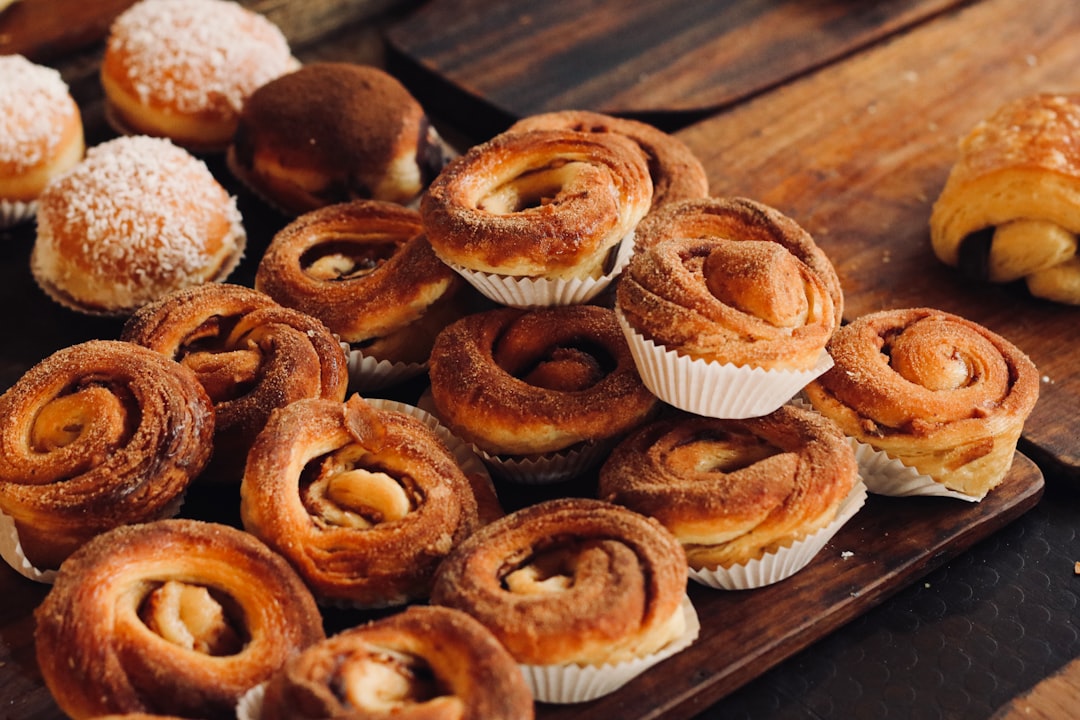
Walk into ten bakeries that opened in 2025 and ask the owner how they priced their croissant. Nine will say “ingredients times three” — the rule of thumb that every culinary school teaches and every accountant for a failing bakery wishes their client had never heard. Ingredients-times-three works for a 60% gross-margin restaurant with a labor model built around minimum-wage line cooks. It doesn’t work for a bakery where the croissant takes 14 minutes of skilled labor to produce and the ingredients cost $0.80.
The real per-item cost of that croissant is not $0.80. It’s somewhere between $2.80 and $3.40, and the bakery that prices it at $2.40 thinks they’re making 67% gross margin while actually losing money on every one they sell. This guide is the full per-item costing formula, walked through on a real croissant, and the menu-engineering moves you make once the numbers tell you the truth.
Note: Margin benchmarks and ingredient costs below are 2026 industry averages. Your actual numbers depend on your supplier relationships, region, equipment efficiency, and staff skill level. Use the formula, plug in your own costs, and rebuild for every menu change.
Why “Ingredients × 3” Is Wrong for Bakeries
The 3× rule of thumb came from full-service restaurants where:
- Food cost is the dominant variable cost.
- Labor is a separate, semi-fixed line item not allocated per dish.
- The dish price covers ingredients × 3, and the rest of the multiple absorbs labor and overhead.
A bakery breaks this model in two specific ways:
- Skilled labor is per-item, not semi-fixed. A baker laminating croissant dough is 14 minutes of skilled labor per dozen — that cost moves directly with volume, not separately.
- Packaging cost is non-trivial. A box, tissue, sticker, and bag for a single croissant costs $0.35–$0.60 — meaningful at a $4 price point.
Add those two and the actual margin math is completely different.
The Five-Part Per-Item Cost Formula
The bakery per-item cost formula has five components. Skip any one and the price is wrong.
Per-Item Cost = Ingredients + Labor + Packaging + Overhead Allocation + Waste
And the price formula is:
Retail Price = Per-Item Cost ÷ (1 − Target Margin %)
Each component breaks down further.
1. Ingredients — Use a 3-Month Average, Not Today’s Price
Flour prices move. Butter moves more. Eggs swing wildly. If you cost an item at today’s wholesale flour price and your supplier raises it 8% next quarter, your margin disappears.
Best practice: use the last 3-month average wholesale price per ingredient, weighted by your actual usage volume. Update quarterly.
A worked croissant ingredient list (per single croissant, recipe yielding 12):
| Ingredient | Per croissant | Cost basis |
|---|---|---|
| Flour (95g) | $0.18 | $1.90/lb wholesale |
| Butter (45g for lamination) | $0.42 | $4.20/lb 82% butterfat |
| Sugar (8g) | $0.02 | $0.42/lb |
| Yeast (2g) | $0.04 | $8.00/lb |
| Salt (1.5g) | $0.001 | nominal |
| Milk (10g) | $0.02 | $0.92/gal |
| Egg wash (¼ egg + dab milk) | $0.08 | $0.32/egg |
| Ingredient cost | $0.76 |
So the croissant ingredient cost is ~$0.76. The temptation to price at $2.28 (3× ingredients) starts here — and goes wrong from here.
2. Labor — Minutes Per Item, Costed at Loaded Wage
Labor per item = (prep minutes + bake minutes + finish minutes + clean minutes) ÷ batch size × loaded hourly wage.
A croissant production schedule:
- Day 1 prep + first lamination: 30 min for 24 croissants = 1.25 min/croissant
- Day 2 second lamination + shaping: 40 min for 24 = 1.67 min/croissant
- Proofing oversight + bake (active time): 15 min for 24 = 0.625 min/croissant
- Finishing (egg wash, cooling, packing): 12 min for 24 = 0.5 min/croissant
- Pro-rata clean: 8 min for 24 = 0.33 min/croissant
- Total active labor: ~4.4 minutes per croissant
At a loaded baker wage of $25/hour (wage + payroll taxes + benefits + minimal training overhead) = $0.42/minute:
Labor cost per croissant: $1.85.
This is the number that breaks the 3× rule. The labor cost alone ($1.85) is 2.4× the ingredient cost ($0.76). A 3× ingredient price ($2.28) doesn’t even cover labor + ingredient ($2.61), let alone packaging and overhead.
3. Packaging — The Cost Most Bakeries Forget
Per-item packaging adds up:
| Item | Cost per croissant |
|---|---|
| Glassine sleeve (if displayed) | $0.04 |
| Bakery tissue square | $0.03 |
| Sticker / branded label | $0.06 |
| Paper bag (if to-go) | $0.18 |
| Box (if multi-item) | $0.10 amortized for solo croissant |
| Total packaging | $0.41 |
If you sell at a market or to-go, you’re at full packaging. If 60% of sales go in a to-go box, calculate the blended average — usually $0.30–$0.40 per item for café-style bakeries.
4. Overhead Allocation — Spread Rent and Utilities Across Output
Rent, utilities, equipment depreciation, and other fixed costs have to land on each item somehow.
Method: divide monthly overhead by monthly unit output.
A small retail bakery:
- Rent: $3,800/month
- Utilities: $750/month
- Equipment depreciation reserve: $400/month
- Insurance: $180/month
- Software/POS/internet: $220/month
- Total monthly overhead: $5,350
If the bakery produces 18,000 items per month across all SKUs:
Overhead allocation: $0.30 per item.
This is a blended average — high-labor items might warrant a higher allocation, but $0.30 is a defensible per-item floor for a small bakery.
5. Waste — Built In, Not Hoped Away
Industry waste benchmark: 8–12% of production. Croissants are higher (12–15%) because of the laminated-dough complexity — under-proofed batches, over-baked batches, and end-of-day unsold inventory.
Build waste into the cost: multiply the running total by 1.10 (10%) to 1.15 (15%) for high-waste items.
Putting It All Together — Real Croissant Cost
Sum the five components:
| Component | Per croissant |
|---|---|
| Ingredients | $0.76 |
| Labor | $1.85 |
| Packaging | $0.35 (blended) |
| Overhead allocation | $0.30 |
| Subtotal | $3.26 |
| Waste multiplier (×1.12) | $0.39 |
| Total per-item cost | $3.65 |
That’s the real cost of one croissant in 2026. Not $0.76. Not $2.28 (3× ingredients). $3.65.
Calculating the Retail Price
Now apply your target margin:
Retail Price = $3.65 ÷ (1 − 0.30) = $5.21
At a 30% gross margin target, the croissant prices at $5.21. Round to a clean $5.25 or $5.50 depending on local market positioning.
For a 40% target margin: $3.65 ÷ 0.60 = $6.08, round to $6.
The bakery that prices the croissant at $4 because “the competitor charges $4” is leaving $1.25–$2.00 of margin on every croissant, and at 200 croissants a week that’s $13,000–$20,800 a year of unrealized margin from one SKU.
Menu Engineering Once You Have the Real Numbers
Once every SKU on the menu has a real per-item cost, you can rank them by margin % and by sell-through volume. The 2×2 grid:
| High volume | Low volume | |
|---|---|---|
| High margin | Stars — promote, bundle, front of case | Hidden gems — increase visibility, slightly raise price |
| Low margin | Workhorses — protect with portion control, watch ingredient cost | Dogs — kill or radically reprice |
A bakery typically discovers, on running this analysis for the first time:
- 2–4 SKUs are dogs — low margin AND low volume. Cut them; reclaim the production time for stars.
- 1–2 SKUs are stars losing money — high volume, low margin because ingredient cost crept up. Raise the price 8–15%; volume usually holds.
- 3–5 SKUs are hidden gems — high margin, low volume. Reposition (place front of case, photograph for social, bundle into pickup options).
Common Pricing Mistakes Bakeries Make
Pricing by competitor matching. “The bakery down the street charges $4 for their croissant” tells you nothing about your cost structure. Their labor might be a partner with no wage; yours is loaded at $25/hr. Match on positioning, not price.
Pricing wholesale at 70% of retail. The classic wholesale pricing error. Wholesale should be priced from your actual wholesale cost (which is lower — no per-item packaging, no retail labor at the counter, larger order sizes amortize overhead). Calculate it the same way: ingredients + labor + bulk packaging + overhead + waste, then apply your wholesale margin target (typically 25–35% gross).
Never raising prices. Ingredient inflation runs 4–7% per year in baking. If you don’t raise prices annually, your margin compresses by that amount every 12 months. Set a yearly menu review (January is common) and walk through the formula again with updated ingredient costs.
Underestimating laminated-dough labor. Croissants, kouign-amann, danishes, and puff pastries are all labor-heavy. Costing them like a muffin (low labor) and pricing them like a muffin is how artisan bakeries quietly lose money in their highest-prestige SKUs.
What Healthy Bakery Margins Look Like in 2026
By category, stabilized gross margins in 2026:
| Category | Healthy gross margin |
|---|---|
| Drip coffee + espresso | 70–85% |
| Croissant + viennoiserie | 32–42% |
| Loaf breads (high labor) | 26–34% |
| Cakes + custom orders | 50–65% |
| Sandwiches + savory | 45–60% |
| Wholesale (bulk) | 25–35% |
A balanced retail bakery with a coffee program typically lands at a blended 38–48% gross margin. Below 35% blended and the rent is eating you alive; above 50% and you’re either super-efficient or pricing past what your market can sustain (verify with retention data).
FAQ
How often should I re-cost my menu items? Quarterly at minimum, monthly if ingredient prices are volatile. Most bakeries are surprised the first time they recost — items they thought were profitable show 12% margin, and items they thought were break-even are 38% margin.
What if my market won’t support the formula-derived price? Two options: (1) reduce the per-item cost (smaller portion, ingredient substitution, batch efficiency improvement), or (2) accept lower margin on the loss-leader SKU and make it up on cross-sell stars. Don’t just lower the price and ignore the math.
Should I include owner labor in the formula? Yes, valued at what you’d pay a baker (or what your CPA would impute as reasonable owner compensation). Otherwise, you’re subsidizing the business with free labor and undercutting competitors who pay their staff fairly.
How does this compare to home bakery pricing? Home bakeries have lower overhead allocation (you’re not paying retail rent) but the same labor + ingredient + packaging cost. A home croissant might cost $2.80 instead of $3.65 — still meaningfully higher than the 3× rule suggests.
What’s a good first item to recost when I’m overwhelmed? Your highest-volume item. That’s the one where pricing errors compound the fastest. Most bakeries find their top-seller is mispriced by 10–25%.
The Full Costing System
This post is the per-item formula. The full system — Excel costing calculator with 50+ ingredient cost templates, per-item batch labor worksheets, menu engineering matrix, wholesale pricing tool, and the 24 printable bakery decision tools — is inside our bakery business plan and toolkit on Etsy. 138-page lender-ready plan plus 24 printable tools — built for bakers who want to price from the numbers, not the gut.
#Bakery #Pricing #Per-Item Costing #Small Business #Menu Engineering